Technical Translation Services: Precision and Expertise for Your Industry Documents
Technical translation services require specialized expertise to accurately convey complex terminology across languages. This guide explains how professional technical translators ensure precision, maintain industry standards, and deliver documentation that meets regulatory requirements in global markets.
What Are Technical Translation Services
Technical translation services encompass the specialized conversion of scientific, engineering, and industrial documentation from one language to another. Unlike general translation, this discipline demands translators who combine linguistic proficiency with deep subject-matter expertise. A single mistranslated term in a user manual, safety protocol, or engineering specification can lead to equipment failure, safety incidents, or regulatory non-compliance.
The scope of technical translation extends across numerous document types. These include instruction manuals, product specifications, patents, technical proposals, software documentation, and maintenance guides. Each document type presents unique challenges that require translators to understand both the source material and its intended application. Professional translators working in this field typically hold qualifications in engineering, IT, or related disciplines alongside their linguistic credentials.
What distinguishes quality technical translation from machine-generated output is contextual understanding. Technical documents often contain abbreviations, formulae, and industry-specific conventions that require human interpretation. A qualified translator recognizes when a term has multiple meanings across different industries and selects the appropriate equivalent for the target audience.
Specialized Terminology in Technical Translation Services
The foundation of accurate technical translation services lies in mastering specialized vocabularies. Industries such as automotive, aerospace, pharmaceuticals, and telecommunications each maintain distinct terminological frameworks that have evolved over decades. Translators must navigate these frameworks while respecting regional variations in technical language.
Customised glossaries play a critical role in maintaining terminological consistency across large translation projects. These glossaries capture client-specific terminology, preferred translations, and prohibited terms. When translation teams work with established glossaries, they deliver documentation that reflects the client's brand voice and technical standards consistently across all materials.
The challenge intensifies when translating between languages with different technical traditions. German engineering documentation, for instance, follows conventions that differ substantially from those used in English-speaking countries. Skilled translators bridge these differences while preserving the technical accuracy and usability of the original content.
Key Industries Requiring Technical Translation
Manufacturing companies represent one of the largest consumers of technical translation services. Global supply chains demand documentation in multiple languages, from assembly instructions to quality control procedures. The European Commission's Directorate-General for Translation emphasizes that accurate technical documentation supports product safety and regulatory compliance across the EU's 24 official languages.
The information technology sector generates enormous volumes of technical content requiring translation. Software documentation, API references, and user interfaces must function seamlessly in target languages while preserving technical precision. This requires translators who understand programming concepts, database terminology, and software development workflows.
Engineering consultancies, pharmaceutical manufacturers, and energy companies also depend heavily on professional translation. These industries face stringent regulatory requirements where documentation errors can result in project delays, compliance failures, or legal liability. Working with certified translation providers offers assurance that translators meet recognized professional standards.
The Technical Translation Process
A structured translation workflow distinguishes professional services from ad-hoc approaches. The process begins with project analysis, where translators assess document complexity, identify specialized terminology, and establish quality benchmarks. This preliminary phase prevents costly revisions later in the project cycle.
The translation phase itself follows the TEP model: Translation, Editing, and Proofreading. A translator produces the initial draft, working with translation memories and glossaries to ensure consistency. A second linguist then reviews the translation against the source, checking for accuracy, completeness, and terminological correctness. Finally, a proofreader examines the target text for linguistic quality and formatting.
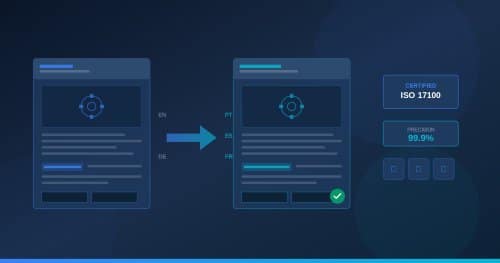
Quality control extends beyond linguistic review. ISO 17100:2015, the international standard for translation services, specifies requirements for translator qualifications, project management, and quality assurance procedures. Compliance with this standard demonstrates that a translation provider maintains documented processes and employs qualified professionals.
Quality Standards and Certification
The ISO 17100 certification represents the benchmark for professional translation services. This standard requires that translators hold recognized qualifications or demonstrate equivalent professional experience. It also mandates that all translations undergo revision by a second qualified linguist, ensuring an additional layer of quality control.
Beyond ISO 17100, technical translation providers may hold sector-specific certifications. Pharmaceutical translation, for example, may require familiarity with GxP documentation standards. Automotive translation often involves knowledge of VDA quality management requirements. These additional qualifications demonstrate depth of expertise in particular industries.
The certification process involves regular audits by accredited bodies such as Bureau Veritas or TÜV. These audits verify that translation providers maintain their quality management systems and continue meeting standard requirements. For clients, selecting a certified provider reduces risk and provides documented assurance of translation quality.
Choosing a Technical Translation Provider
Evaluating technical translation providers requires examining several key factors. First, consider the provider's experience in your specific industry. A translation company with extensive engineering sector experience will deliver better results for technical manuals than a generalist agency. Ask for case studies and client references from comparable projects.
Second, assess the provider's quality assurance processes. Request documentation of their workflow, including how they handle terminology management, revision procedures, and quality metrics. Providers following continuous improvement methodologies demonstrate commitment to ongoing quality enhancement.
Third, evaluate technological capabilities. Modern translation providers use translation management systems, translation memories, and terminology databases to improve consistency and efficiency. These tools help maintain terminological consistency across large projects and reduce costs for recurring content.
Finally, consider responsiveness and project management capabilities. Technical translation often involves tight deadlines and complex coordination requirements. A provider with robust project management, clear communication channels, and flexible delivery options can better accommodate your operational needs. When you're ready to discuss your project, request a quote to receive a detailed proposal tailored to your requirements.
FAQ
Q1. What qualifications should technical translators have?
Technical translators should hold a combination of linguistic and subject-matter qualifications. The ISO 17100 standard specifies minimum requirements: either a recognized translation degree, a degree in another field plus two years of professional translation experience, or five years of professional translation experience. For technical work specifically, translators typically possess additional credentials in engineering, IT, or related technical disciplines.
Beyond formal qualifications, practical experience in the relevant industry provides invaluable context. A translator who has worked in manufacturing environments, for instance, brings firsthand understanding of production terminology and documentation conventions. This experiential knowledge helps translators make appropriate choices when formal terminology resources don't address specific situations.
Professional development remains essential throughout a translator's career. Technical fields evolve continuously, introducing new terminology and concepts. Translators maintaining current knowledge through industry publications, professional associations, and specialized training deliver more accurate and up-to-date translations.
Q2. How do technical translation services handle confidential documents?
Professional translation providers implement comprehensive confidentiality measures to protect client information. These measures begin with non-disclosure agreements binding both the translation company and individual translators working on projects. All project materials remain within secure systems with access limited to assigned team members.
Data security infrastructure includes encrypted file transfer systems, secure project management platforms, and controlled access to translation memories and glossaries. ISO 17100 certified providers must demonstrate appropriate data protection measures as part of their certification requirements. Many providers also maintain ISO 27001 information security certification for additional assurance.
For highly sensitive projects, providers may offer enhanced security options including dedicated translation environments, restricted translator pools, and detailed audit trails documenting all access to project materials. Discussing specific confidentiality requirements during project planning ensures appropriate measures are implemented from the outset.
Q3. What is the difference between technical translation and localization?
Technical translation focuses on converting document content from source to target language while preserving meaning, accuracy, and technical precision. The primary objective is linguistic equivalence, ensuring that target-language readers receive the same information as source-language readers. Technical translation applies to documentation that requires accuracy above all other considerations.
Localization extends beyond translation to adapt content for specific markets or regions. This includes adjusting measurements and units, modifying date and number formats, adapting cultural references, and restructuring content to meet local expectations. Software localization, for example, involves translating interface elements while ensuring they fit within designated screen space and function correctly in the target environment.
Many technical projects require elements of both translation and localization. A user manual might need accurate translation of procedural content while also requiring localized safety symbols, adapted voltage specifications, and region-specific regulatory references. Professional providers assess project requirements and apply the appropriate combination of translation and localization services.
Q4. How long does technical translation typically take?
Translation timelines depend on several factors including document volume, complexity, subject matter, and required quality level. As a general benchmark, professional translators typically produce 2,000 to 3,000 words of finished translation per working day for standard technical content. Highly specialized material with dense terminology may reduce this rate significantly.
The complete project timeline extends beyond translation to include project setup, revision, proofreading, and quality assurance phases. A 10,000-word technical manual might require five to seven working days from start to delivery, allowing time for comprehensive quality control. Urgent projects can be accommodated through parallel workflows and expanded teams, though this typically incurs premium pricing.
Planning translation requirements early in project cycles provides flexibility and often improves outcomes. Providers receiving adequate lead time can assign optimal translator teams, conduct thorough terminology preparation, and implement comprehensive quality assurance without schedule pressure.
Q5. How can I ensure terminological consistency across multiple technical documents?
Terminological consistency begins with establishing a controlled vocabulary for your project or organization. This involves creating a terminology database or glossary that defines preferred translations for key terms, identifies prohibited alternatives, and provides context notes guiding translator decisions. Professional providers can assist with terminology extraction and database development.
Translation memory technology provides another consistency mechanism. These systems store previously translated segments and automatically suggest matching translations when similar content appears in new documents. Over time, translation memories accumulate project-specific translations that help maintain consistency even when different translators work on subsequent documents.
Regular terminology reviews keep reference materials current and address emerging terms or changed preferences. Establishing a clear approval process for new terminology prevents unauthorized variations from entering documentation. When terminology questions arise during translation, documenting decisions and updating reference materials ensures consistent treatment in future projects.