- What Certified Translation Means and When It Is Required
- Apostille, Legalisation, or Translation: Understanding the Difference
- What a Birth Certificate Translation Must Include
- Turnaround Times and Cost Factors
- M21Global: Certified Document Translation for Portuguese Visa Applications
- Frequently Asked Questions
Applying for a visa to Portugal requires submitting personal documents that have been formally translated and certified. The birth certificate is among the most commonly requested documents in these processes — and one that generates the most confusion about what kind of translation is actually required.
What Certified Translation Means and When It Is Required
A certified translation (known in Portuguese as *tradução juramentada* or *tradução certificada*) is a translation accompanied by a signed declaration from the translator, attesting that the target-language content faithfully reflects the source document. In Portugal, this type of translation is required by the competent authorities — principally AIMA (Agência para a Integração, Migrações e Asilo, formerly SEF) and Portuguese consulates abroad — whenever documents submitted are written in a language other than Portuguese.
A birth certificate issued in another country must, as a general rule, be accompanied by a certified Portuguese translation when it forms part of a visa application, residence permit request, or family reunification procedure. An uncertified translation is not accepted in these contexts.
This requirement applies regardless of visa type: long-stay visas (D1 through D8), family reunification visas, or student visas. Applicants should verify the specific requirements with the receiving authority, as consulates may have additional instructions depending on the country of origin.
Apostille, Legalisation, or Translation: Understanding the Difference
These three concepts appear frequently in the same application process and are often confused:
- Hague Apostille: certifies the authenticity of the original document. Required when the issuing country has acceded to the 1961 Hague Convention. It does not replace translation — it is a parallel requirement.
- Consular legalisation: required when the issuing country is not a party to the Hague Convention. This involves authentication by the competent authority in the country of origin, followed by the Portuguese consulate.
- Certified translation: concerns the linguistic content of the document. Always required when the birth certificate is in a foreign language, regardless of whether it has already been apostilled or legalised.
In practice, the complete process for a foreign birth certificate typically involves: (1) obtaining an up-to-date original document, (2) apostille or legalisation depending on the country of origin, and (3) a certified translation into Portuguese.
What a Birth Certificate Translation Must Include
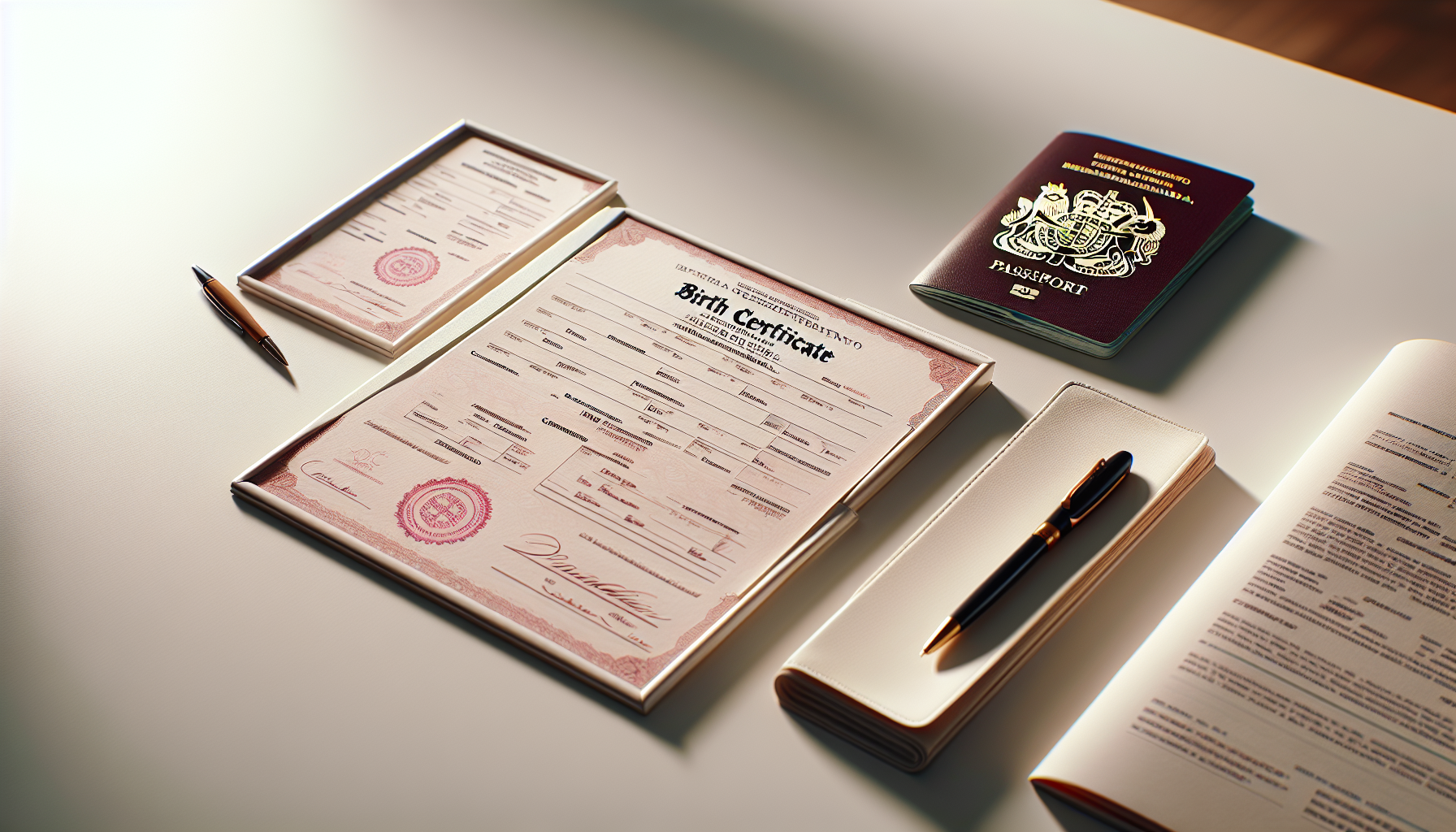
A certified translation of a birth certificate must reproduce every element of the original document in full, including:
- Full name of the holder and the parents
- Date, time, and place of birth
- Registration number and references to the issuing registry or authority
- Any amendments or marginal notes
- Stamps and signatures of the issuing authority (described within the translation)
Omitting any element — even one that seems minor — can result in the document being rejected by the receiving authority. The translator must also certify the document with their signature, professional identification number, and, where applicable, the stamp of the translation company.
Translations are generally submitted in hard copy, with all certification elements visible. Some authorities accept digital versions with a qualified electronic signature, but this should be confirmed before commissioning the translation.
Turnaround Times and Cost Factors
The cost of a certified translation of a birth certificate depends on several variables:
- Language pair: less widely spoken languages (e.g. Arabic, Bengali, Nepali) typically carry a higher cost than common pairs (e.g. English–Portuguese, French–Portuguese).
- Volume and complexity: certificates with extensive amendments or dense legal text require more time.
- Urgency: rush translations (24 to 48 hours) generally carry a surcharge.
- Additional certification: if the translation itself requires an apostille or notarial recognition, this adds to the overall cost and timeline.
The standard turnaround for a simple birth certificate is typically 2 to 3 working days. Urgent requests can often be handled within 24 hours, subject to availability and language pair.
M21Global: Certified Document Translation for Portuguese Visa Applications
M21Global provides certified translations of birth certificates and other personal documents for visa applications, residence permits, and family reunification procedures in Portugal. With 20 years of experience, ISO 17100:2015 certification, and over 300 million words translated, the company works with translators specialised in legal documentation across dozens of language pairs — including less common languages from Africa, Asia, and Latin America.
Request a quote at m21global.com or contact the team directly to confirm availability and turnaround time for your application.
Frequently Asked Questions
Is a certified translation of a birth certificate required for a Portuguese visa application?
Yes. When the birth certificate is written in a foreign language, AIMA and Portuguese consulates require a certified Portuguese translation. An uncertified translation is not accepted.
Does an apostille replace the need for a certified translation?
No. An apostille confirms the authenticity of the original document but does not replace the translation. Both are typically required: the apostille (or consular legalisation) authenticates the document, while the certified translation converts its content into Portuguese.
How long does a certified translation of a birth certificate take?
Standard turnaround is 2 to 3 working days for straightforward certificates. Rush service is available in 24 hours for many language pairs, subject to availability.
Can a certified translation be submitted digitally to Portuguese authorities?
Most authorities in Portugal require a hard copy with original certification. Some accept digital versions with a qualified electronic signature, but applicants should confirm this with the receiving authority before commissioning the translation.
Can the same certified translation be used for multiple visa applications or procedures?
Generally yes, provided the original document has not changed and the translation remains within any validity period set by the receiving authority. Some authorities specify a maximum age for supporting documents, so it is worth confirming the requirements for each specific process.