
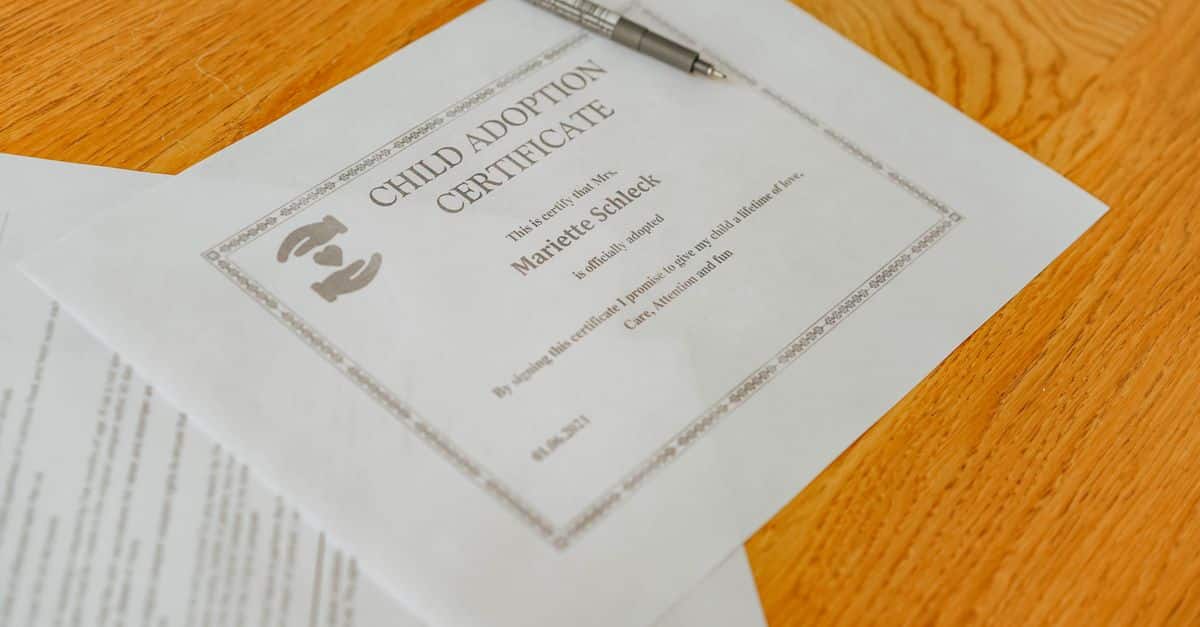
When a Portuguese court, notary, or public authority asks for a sworn translation, they are not asking for a high-quality translation in the general sense. They are asking for a document with a specific legal status, produced by a qualified professional who assumes legal responsibility for its accuracy. Getting this wrong means rejected documents and restarted processes.
What sworn translation actually means
A sworn translation in Portugal is produced by a translator recognised by the relevant professional body or the Ministry of Justice. The translator signs the document, attests to its conformity with the original, and in many cases applies a professional seal. That signature carries legal weight. The document is accepted by courts, public registries, notarial offices, and administrative bodies as a legally valid rendering of the original.
Three terms are commonly confused, and the distinction matters:
- Standard translation: produced by a qualified translator, with no official certification. Suitable for internal use, preliminary analysis, or any context where there is no legal requirement for certification.
- Certified translation: the translator or translation company attests that the translation accurately reflects the original. Accepted in certain business and institutional contexts, but it does not carry the same legal standing as a sworn translation for judicial or notarial purposes.
- Sworn translation (tradução juramentada): a legally valid document, signed by a qualified sworn translator, accepted by Portuguese authorities and courts. This is what is required for formal legal proceedings, civil registry submissions, and official administrative procedures.
The Hague Apostille is a separate matter. It authenticates the origin of the source document, not the translation itself. When a foreign apostilled document needs to be submitted in Portugal, the translation must still be sworn.
When sworn translation is required in Portugal
As a general rule, sworn translation is required whenever a foreign-language document is to produce legal effects in Portugal. The most common situations include:
- Civil registry and notarial acts: birth, marriage, and death certificates issued abroad, required for registration with the Instituto dos Registos e do Notariado (IRN).
- Court proceedings: documents submitted in evidence or support, including powers of attorney, contracts, foreign judgments, and declarations.
- Immigration and nationality applications: documents required by AIMA (the current immigration authority) for residence permits, family reunification, or naturalisation.
- Recognition of qualifications: academic or professional credentials submitted to regulated bodies such as the Ordem dos Médicos, Ordem dos Advogados, or Direcção-Geral do Ensino Superior.
- Property and corporate transactions: deeds involving foreign parties, share transfer agreements, or company incorporation documents where one or more parties are non-resident.
- Tax and customs procedures: documents submitted to the Autoridade Tributária or customs authority when issued in a foreign language.
The practical approach is to confirm with the receiving authority before commissioning the translation. Most public bodies in Portugal require sworn translations for foreign-language documents with legal relevance. Assuming a certified translation will suffice is a common and costly mistake.
What the process involves in practice
Sworn translation follows a different process from standard commercial translation. The key steps are:
- Receipt of the original document (or a certified copy), which the translator must review in full before beginning work.
- Translation by a qualified sworn translator with subject-matter expertise in the relevant field (legal, medical, technical) and the specific language pair.
- Review and certification, with the translator's signature and a conformity declaration attesting that the translation faithfully reproduces the original.
- Delivery of the physical document or, where accepted by the receiving authority, a digitally signed version with a qualified electronic signature.
Turnaround times vary according to document length, subject complexity, and urgency. Simple civil registry certificates can typically be completed in 24 to 48 hours. Longer documents, such as international contracts or court judgments, require more time.
The factors that affect cost include the language pair, document volume, subject area, urgency, and the type of certification required. There is no standard rate, and requesting a quote based on the specific document is always the right approach.
Common mistakes that delay proceedings
Several avoidable errors regularly cause documents to be rejected or processes to stall:
- Submitting a certified translation where a sworn translation is required. The authority rejects the document and the process restarts.
- Failing to apostille the source document when required. The translation may be correct, but the source document lacks recognised international validity.
- Not confirming the receiving authority's specific requirements. Some bodies have particular requirements regarding format, language pair, or certification type.
- Relying on machine translation without specialist human review. For documents with legal consequences, a terminological error can have direct legal implications.
- Misjudging the lead time. Ordering a sworn translation with 12 hours to spare before a court deadline is rarely viable without urgent delivery surcharges, and sometimes not viable at all.
How M21Global handles these requests
M21Global provides legal translation services certified to ISO 17100:2015 (audited by Bureau Veritas), with over 20 years of experience handling legal documentation for Portuguese and international clients. For sworn and certified translations, the Estratégica service applies: three linguists in the workflow (translator, reviewer, and QA reviewer), a dedicated project manager, and two post-delivery revision rounds. This is the appropriate structure for documents with direct legal consequences, where there is no margin for error.
To confirm the requirements for a specific document and receive a quote matched to the deadline and receiving authority, contact M21Global today at m21global.com.
Related Services
Request a free legal translation quote
- Request a free legal translation quote
- Certified Legal Translation Services
- Sworn Translation For Court Documents
- Legal Translation Services For Contracts
Frequently Asked Questions
What is the difference between sworn translation and certified translation in Portugal?
A sworn translation is produced by a translator recognised by the relevant Portuguese authority and carries legal validity before courts and public bodies. A certified translation attests to the accuracy of the rendering but does not have the same legal standing for judicial or notarial purposes.
Does a sworn translation have to be submitted as a physical document?
It depends on the receiving authority. Some accept digitally signed documents with a qualified electronic signature. Others require the physical document with the translator's original signature. Always confirm the requirements before commissioning the work.
Is an apostille required for a sworn translation to be valid?
The apostille applies to the source document, not to the translation. If the original foreign document requires an apostille under the Hague Convention, that must be obtained before the translation is commissioned. The translation itself must then be sworn separately.
How long does a sworn translation take in Portugal?
Simple civil registry documents can typically be ready in 24 to 48 hours. Longer or more complex documents, such as international contracts or court judgments, require more time. Providing a clear deadline when requesting a quote allows the agency to confirm feasibility.
Are sworn translators available in Portugal for all languages?
For common language pairs such as English, Spanish, French, German, and Arabic, availability is generally good. For less common languages, lead times may be longer. Confirming availability with the translation provider before starting any formal process is advisable.