
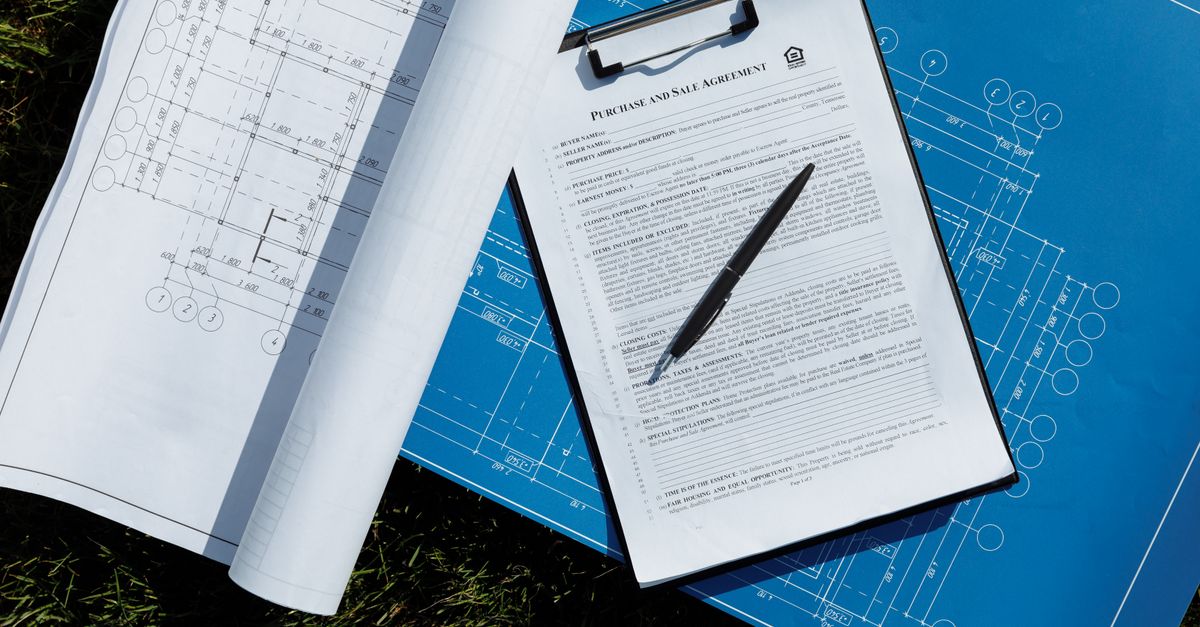
When a company wins or executes a construction contract in a foreign country, that contract governs everything: scope of work, payment terms, liability, penalties and dispute resolution. Submitting it in a language the counterparty or local authorities do not recognise is, in practical terms, the same as having no contract at all. Translation is not an administrative afterthought; it is part of the contractual process itself.
What makes construction contracts technically demanding to translate
Construction contracts sit at the intersection of legal language and engineering terminology. A single contract can include bills of quantities, general and special conditions, technical specifications, health and safety plans, and provisions governing subcontractors. Each of these components requires a different register and vocabulary.
Terminological equivalence across legal systems is not straightforward. The Portuguese concept of *empreiteiro* does not map directly onto the English *general contractor*, and terms such as *liquidated damages*, *retention money* and *force majeure* have functional equivalents in most legal systems but require contextual adjustment rather than literal substitution. A translator who works from a bilingual dictionary rather than from knowledge of the destination legal system will produce a document that reads fluently but performs poorly in a dispute.
The stakes are concrete. Errors in construction contract translations have been cited in international arbitration proceedings. The difference between "may" and "shall", or between "termination" and "cancellation", is not a stylistic choice; it is legally determinative.
When certified or sworn translation is required
The requirement for certified or sworn translation depends on the country where the project is located, the authority receiving the document and the nature of the procedure involved.
Certified or sworn translation is generally required in the following situations:
- Registration with local public authorities: in France, Germany or Spain, submitting construction contracts to planning authorities or licensing bodies typically requires versions in the country's official language, sometimes with certification by a recognised translator.
- International arbitration or litigation: when a contract includes an arbitration clause (ICC, LCIA, UNCITRAL), arbitrators require certified translations of all evidential documents. Submitting uncertified translations risks their exclusion.
- Multilateral financing: contracts funded by the World Bank, the European Investment Bank or African development banks frequently require translation into English or French with quality certification.
- Insolvency or recovery proceedings: if one party enters judicial proceedings in the destination country, local courts will require official-language documentation with certified translation.
The distinction between certified and sworn translation matters here. Requirements vary by country. In some jurisdictions, a court-appointed sworn translator must sign the document. In others, certification by a recognised translation company is sufficient. The receiving authority is the definitive source on what level of certification is acceptable. Checking this before commissioning the translation avoids costly rework.
For a detailed breakdown of the certification formats accepted in judicial contexts, see this article on sworn translation for court documents.
Factors that affect cost and turnaround
There is no standard rate for translating construction contracts. Several variables shape both cost and delivery time, and understanding them helps in planning the process accurately:
- Volume and complexity: a 30-page contract with detailed technical annexes takes considerably longer than a 10-page standard form. Construction documentation has higher terminology density than most general legal documents.
- Language pair: specialist availability varies by language combination. Portuguese to English or Spanish is served by a larger pool of construction-sector specialists than Portuguese to Arabic or Mandarin, which requires more lead time.
- Urgency: rush translation requires parallel resources and simultaneous review, both of which affect cost.
- Certification level: a simple translation for internal use is a different product from a certified translation for submission to a public authority or arbitral tribunal.
- Formatting requirements: construction contracts frequently include tables, drawings and plant layouts. Preserving the original format requires desktop publishing work beyond the translation itself.
The level of professional translation service selected should reflect the risk associated with the document. A construction contract worth several million euros warrants the same rigour as any other legal instrument of equivalent value. For guidance on what legal translation services for contracts involve in practice, including the difference between service tiers, the linked article sets out the key distinctions.
How to prepare documents for translation
Translation quality depends partly on the quality of what is submitted. These practical steps reduce turnaround time and improve terminological consistency:
- Provide all annexes: construction contracts rarely stand alone. Bills of quantities, technical specifications, special conditions and drawings form part of the contractual set and should be submitted together rather than in stages.
- Specify the destination country and authority: the translator needs to know whether the document is going to an arbitral tribunal in Paris, a municipal authority in Angola or a licensing body in Berlin. The destination legal context shapes terminology choices.
- Share existing glossaries or prior translations: if the company has previously approved terminology or translated documents in the same project context, sharing these as reference material speeds up the work and ensures consistency across the contract suite.
- Confirm the certification level required: confirming with the receiving authority whether a simple, certified or sworn translation is needed before work begins prevents the expense of redoing the translation in a different format.
M21Global: legal translation for construction contracts
M21Global translates construction contracts and associated documentation for Portuguese and international companies operating in markets including Angola, Mozambique, Brazil, France, Germany, Spain and the UK. With over 20 years of experience and ISO 17100:2015 certification from Bureau Veritas, the workflow for high-risk documents assigns three linguists (translator, reviewer and quality assurance reviewer), two post-delivery revision rounds and a dedicated project manager.
For construction contracts going to public procurement, arbitration or international financing, the Estratégica service tier provides a fully auditable, documented process. Details of the full range of services are available on the M21Global legal translation services page.
Request a quote for your construction contract translation through the form at m21global.com, or contact the team directly to confirm the certification level required for your specific project.
Related Services
Request a free legal translation quote
- Request a free legal translation quote
- Certified Legal Translation Services
- Sworn Translation For Court Documents
- Legal Translation Services For Contracts
Frequently Asked Questions
Does a construction contract translation need to be sworn to be accepted abroad?
It depends on the country and the receiving authority. Some jurisdictions require a court-appointed sworn translator; others accept certification by a recognised translation company. The receiving authority is the definitive source on requirements, and this should be confirmed before commissioning the translation.
What is the difference between certified and sworn translation for construction contracts?
A sworn translation is carried out by a translator officially authorised by a court or government body, and the document carries their official seal or signature. A certified translation is produced by a qualified translation company that attests to the accuracy and completeness of the translation. Which format is accepted depends on the destination country and the authority receiving the document.
How long does it take to translate a construction contract?
Turnaround depends on the volume, language pair and certification level required. For a full construction contract with technical annexes under a standard workflow, the timeline is confirmed in the quote. Rush delivery is possible with additional resources but affects cost.
What risks arise from a poor-quality construction contract translation?
A mistranslation can create contractual ambiguities that are exploitable by the counterparty, invalidate specific clauses, or produce divergent interpretations in arbitration. The cost of a dispute arising from a translation error is typically far greater than the cost of commissioning a qualified specialist from the outset.
Can M21Global translate construction contracts for projects in Africa?
Yes. M21Global has direct presence in Angola and project experience in Angola and Mozambique, and translates construction contracts and associated documentation for those markets with knowledge of the local legal and administrative context.