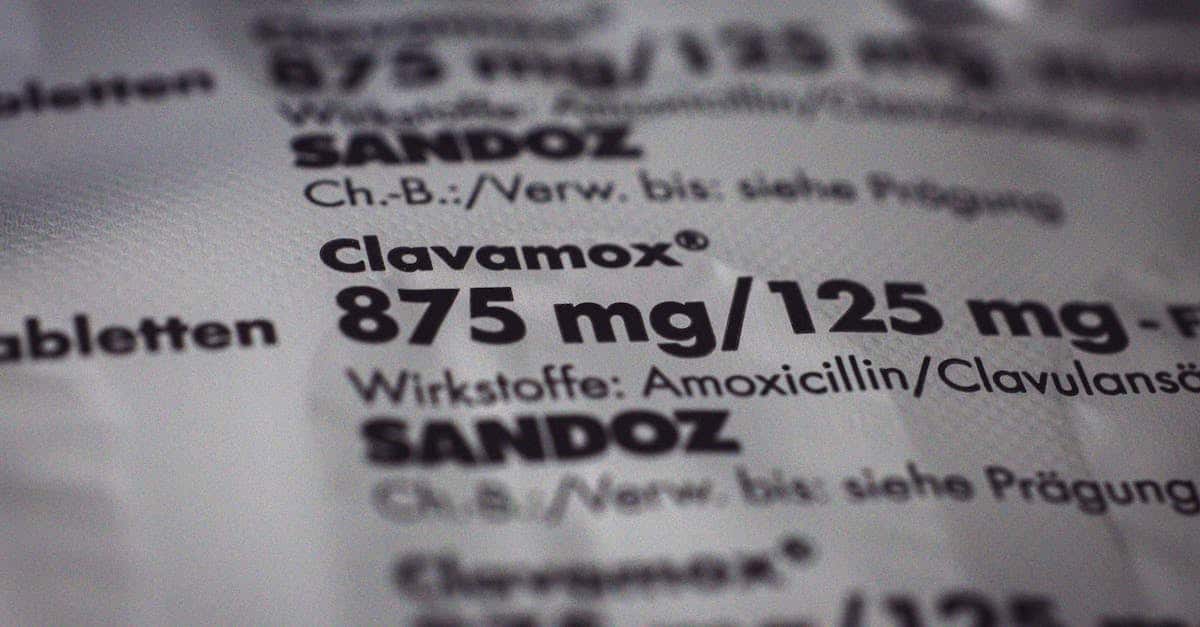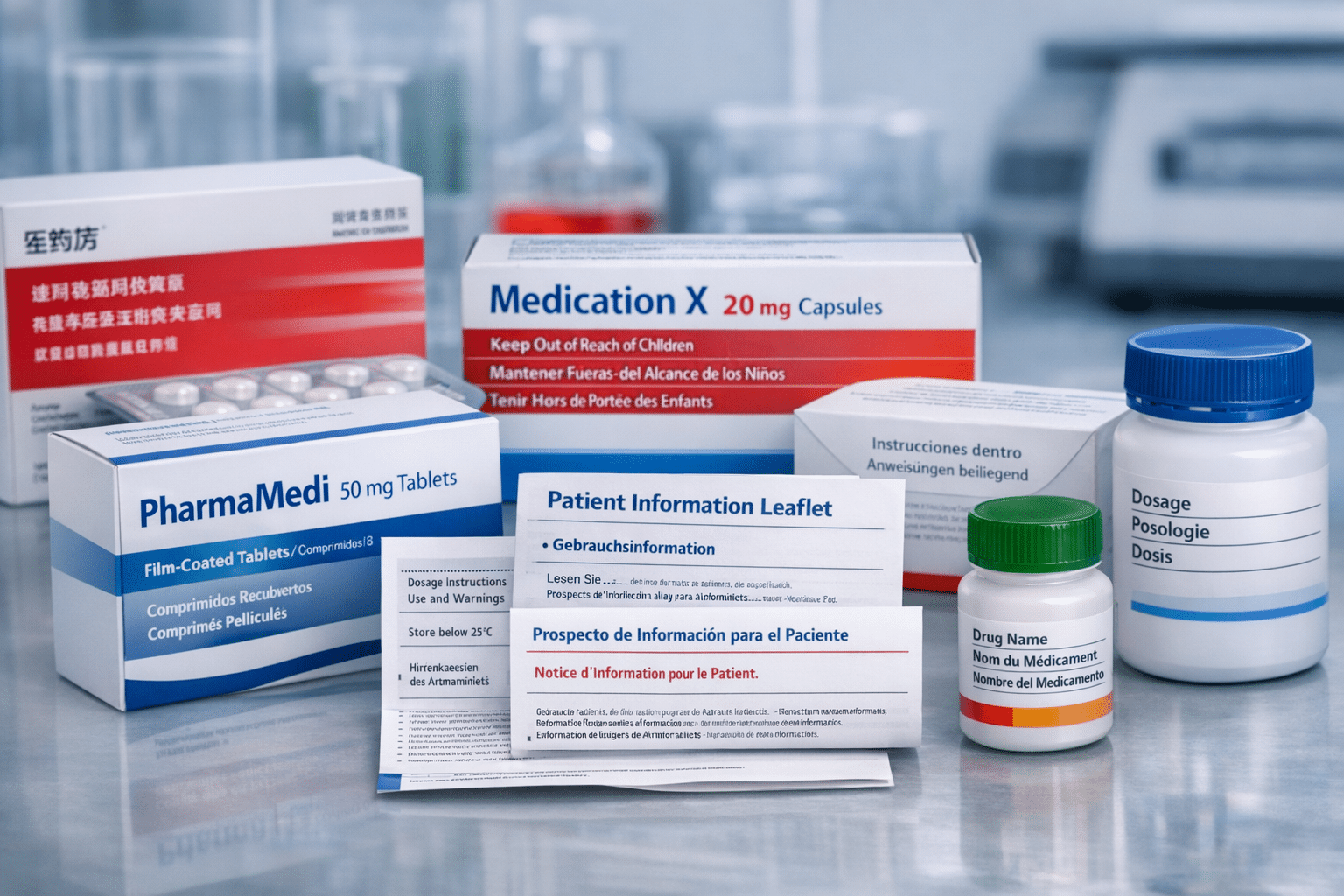

The patient information leaflet (PIL) is a regulated document, not a communication asset. Every medicinal product authorised in the European Union must have a PIL in the official language of each Member State where it is placed on the market. For companies managing EU marketing authorisations, PIL translation is a recurring, high-stakes activity that directly affects regulatory timelines and patient safety.
What EU regulation requires for the PIL
Directive 2001/83/EC and Regulation (EC) No 726/2004 set out the legal framework. The PIL must reflect the approved Summary of Product Characteristics (SmPC), use language accessible to patients, and comply with the EMA's readability guidelines, including the obligation to conduct user testing for centrally authorised products.
The PIL is part of the marketing authorisation (MA) dossier and is reviewed by the competent authorities. Any change to the approved text, including changes that are purely linguistic in nature, requires a variation procedure. This means that errors or inconsistencies introduced during translation do not stay contained: they generate regulatory objections, correction cycles, and delays that have a direct cost.
For a full central procedure submission, the PIL may need to be available in up to 24 official EU languages. For mutual recognition or decentralised procedures, the requirement is set by the reference and concerned Member States, but the standard of quality is identical across all versions.
Technical and linguistic requirements for PIL translation
PIL translation sits at the intersection of regulatory compliance and plain language writing. The two pull in different directions, and managing that tension correctly is what separates acceptable translations from regulatory-ready ones.
Key requirements:
- Consistency with the SmPC: The PIL must align with the corresponding SmPC in terminology and substance. Adverse reactions, dosage instructions, and contraindications described differently in the two documents are a standard source of regulatory objections.
- EMA Standard Terms: Pharmaceutical forms, routes of administration, and container types must use the EMA-approved Standard Terms in each target language.
- INN accuracy: International nonproprietary names must be correctly rendered according to the INN list for each language, not translated freely.
- Readability compliance: The translated text must preserve the patient-facing language of the source. Medical terms used in the SmPC are often paraphrased in the PIL, and the paraphrase must work equivalently in the target language.
- ISO 17100 process: Translation, editing, and proofreading by independent translators with relevant subject-matter expertise. For regulatory documents, this is not optional.
The same terminological discipline applies to drug labelling translation, where space constraints make controlled vocabulary even more critical.
Managing multilingual PIL projects
A multilingual PIL project for a central procedure submission is a project management challenge as much as a linguistic one. Getting 24 language versions to the same quality level, within the same regulatory timeline, requires a structured approach.
What a well-run project looks like in practice:
- Product-specific translation memories and validated glossaries, maintained and updated across the product lifecycle
- Version control that ensures any change to the reference text is propagated consistently to all language versions
- Clear change-tracking between the current submission version and any previously approved text, so that only genuinely changed segments are retranslated
- Deadlines aligned to the regulatory calendar, which does not accommodate translation delays
When an MA holder submits a variation that affects the PIL, leveraging existing translation memory significantly reduces both the turnaround time and the translation volume. The cost of a variation update is a fraction of the cost of a full retranslation, provided the original work was done with proper TM management.
For complex regulatory submissions involving multiple document types, the same quality infrastructure that applies to PILs also covers clinical trial protocol translation and device documentation.
Common errors that generate regulatory objections
Most PIL-related regulatory objections fall into a small number of categories:
- SmPC inconsistency: The most frequent issue. Section 4 of the PIL (possible side effects) does not match the frequency or description of adverse reactions listed in Section 4.8 of the SmPC.
- Non-adapted medical language: Direct translation of clinical terminology without conversion to plain language. The EMA readability guidelines are explicit that the PIL must be understood by the patient, not by the clinician.
- Structural deviations: Mandatory sections missing or reordered. Section headings altered. Warning boxes not reproduced. The PIL structure is prescribed and must be preserved in every language version.
- Absence of independent revision: A single-translator workflow on a regulatory document is not compliant with ISO 17100 and is visible in the quality of the output.
PIL translation with M21Global
M21Global provides pharmaceutical translation services covering PILs, SmPCs, and MA dossier documentation for EMA central procedures and national authority submissions across EU Member States. The process is ISO 17100:2015 certified (Bureau Veritas), with translation and independent revision carried out by specialists with pharmaceutical science or medical backgrounds. All projects use dedicated translation memories and client-validated glossaries, maintained across the product lifecycle. M21Global covers all 24 official EU languages and operates from offices in Lisbon, São Paulo, and Luanda. Request a quote for your PIL translation project and receive a detailed proposal including process specification, timeline, and quality assurance steps.
Related Services
Request a free medical translation quote