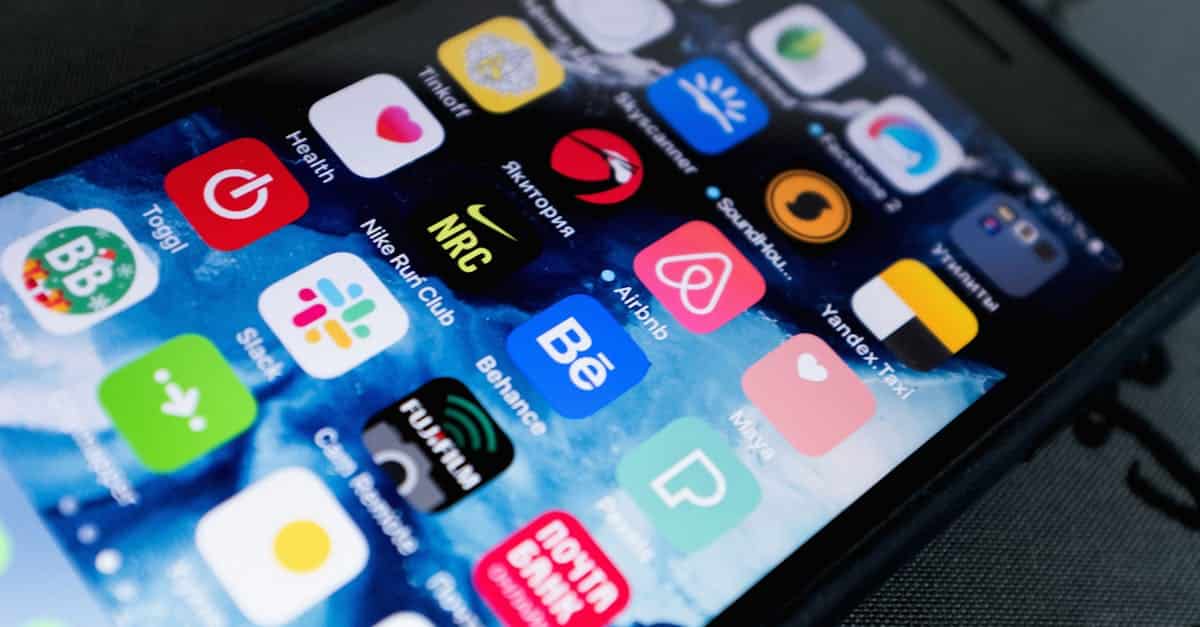
A mobile application built for the Portuguese or European market will not perform the same way in Angola or Mozambique — even when the interface is already in Portuguese. Vocabulary, payment systems, cultural references, and user expectations differ enough between markets to make generic Portuguese a liability rather than an asset. App localisation addresses each of these layers deliberately.
Why localisation goes beyond translation for mobile apps
Translation replaces words. Localisation adapts the experience. For a mobile application, that means working across several distinct layers:
- User interface (UI): buttons, labels, error messages, push notifications — every visible text element.
- Dynamic content: system-generated strings such as transaction confirmations, alerts, and in-app reports.
- Regional formats: currency (Angolan kwanza — AOA; Mozambican metical — MZN), date formats, and phone number conventions (+244 for Angola, +258 for Mozambique).
- Payment flows: integration with Multicaixa references in Angola and M-Pesa or e-Mola in Mozambique, each with its own terminology that users recognise and trust.
- Tone and register: Portuguese as spoken in Luanda differs from Portuguese as spoken in Maputo. Both differ from Lisbon. Getting this right signals investment in the market; getting it wrong signals a copy-paste approach.
A poorly localised app communicates a lack of commitment. A well-localised app builds trust from the first screen.
Market differences between Angola and Mozambique that shape localisation decisions
Angola and Mozambique share Portuguese as an official language, but they are distinct markets that require separate localisation strategies.
- Economy centred on oil, construction, and a growing financial services sector.
- High penetration of mid-range Android devices.
- Angolan Portuguese carries vocabulary and expressions influenced by Kimbundu and Umbundu — terms that native speakers use naturally and that a generic translation will miss.
- Mobile data usage is high; app performance on 3G/4G networks with variable coverage is a practical consideration that affects content decisions.
- Visual and colour sensibilities differ from European norms and should inform UI design choices during localisation.
- A linguistically diverse market — Portuguese coexists with Changana, Makua, Sena, and other Bantu languages. Depending on the target segment, localisation into additional languages may be relevant.
- Among the highest mobile money penetration rates in sub-Saharan Africa; correct terminology for M-Pesa and e-Mola flows is not optional.
- Mozambican Portuguese has its own syntactic patterns and vocabulary that distinguish it from both European and Angolan Portuguese.
- Outside Maputo, connectivity is more limited — readability on smaller screens and data efficiency are design considerations that affect localisation choices.
Localising for both markets simultaneously requires separate locale files, not a shared solution.
Practical steps in a mobile app localisation project
A well-executed localisation project does not begin with translation — it begins with technical preparation.
1. Internationalisation (i18n) first: The app must be architected to support multiple locales before localisation begins. Hardcoded text in the source code blocks the process. The development team should deliver externalised string files in the appropriate format — JSON, XLIFF, XML, strings.xml for Android, or Localizable.strings for iOS.
2. Localisation brief: Defines the target audience, tone of voice, terms that should not be translated (feature names, brand terms, specific CTAs), and string length restrictions for UI elements.
3. Translation with terminology control: Translators work with approved glossaries, translation memories, and market-specific style guides. UI text requires particular attention to text expansion — Portuguese can run up to 30% longer than English in certain constructions, which affects layout.
4. Linguistic and functional review: Includes consistency checks, cultural appropriateness, and in-context reading — not just review of the string file in isolation.
5. Localisation quality assurance (LQA): Verification of the localised app on a real device or emulator — checking for truncations, overlapping elements, incorrectly rendered special characters, and payment flow terminology.
6. Delivery and integration: Files returned in the original format, ready for direct integration into the development pipeline.
M21Global: localisation for Portuguese-speaking African markets
M21Global has direct presence in Angola and a track record of localisation projects for both the Angolan and Mozambican markets. The team combines native translators from each target market with reviewers who specialise in digital content and mobile applications — ensuring the final output reflects the Portuguese actually used in each country, not a generic approximation.
All projects are managed in compliance with ISO 17100:2015 and include glossaries, translation memories, and style guides that remain the client's property for future projects. The workflow is compatible with all major localisation file formats and supports API-based integrations.
Request a quote for your mobile app localisation into Angolan and Mozambican Portuguese — the M21Global team responds within 24 business hours.
Frequently Asked Questions
Can the same string file be used for both Angola and Mozambique?
It is not recommended. Although both countries use Portuguese as an official language, differences in vocabulary, register, and cultural context justify separate locale files for each market.
Which localisation file formats does M21Global support for mobile apps?
The most common formats for mobile app localisation are XLIFF, JSON, strings.xml (Android), and Localizable.strings (iOS). M21Global works with all of these and returns files ready for direct integration into the development pipeline.
Does payment flow terminology need to be localised separately?
Yes. In Angola, Multicaixa has its own terminology; in Mozambique, M-Pesa and e-Mola each use terms that users recognise. Incorrect or generic wording in payment flows increases abandonment rates.
How long does a mobile app localisation project typically take?
For a medium-sized app (3,000 to 8,000 words), a full localisation including review typically takes 5 to 10 business days. Rush timelines can be arranged on a case-by-case basis.
Does M21Global offer localisation quality assurance (LQA) for mobile apps?
Yes. The localisation service can include an in-context UI review phase, checking for truncations, formatting issues, and text rendering on the actual app screens.