- What separates localisation from translation in this context
- Localisation checklist: the essential elements
- Mistakes that undermine a market launch
- How to structure the localisation process for this market
- M21Global: localisation for lusophone African markets
- Related Services
- Frequently Asked Questions
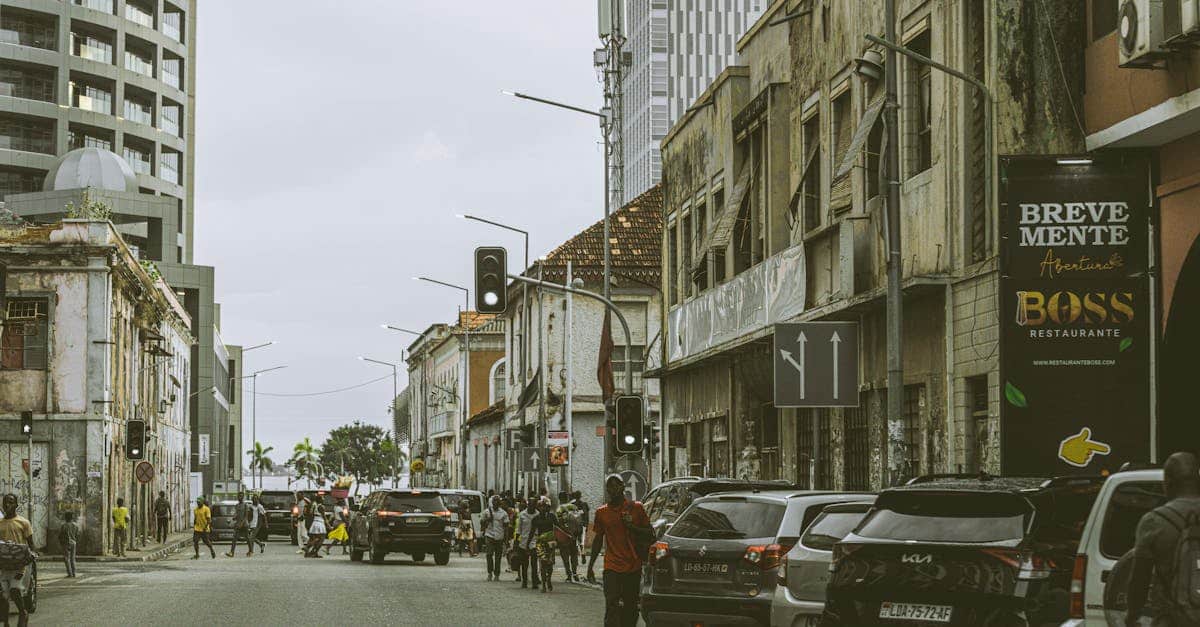
Entering the Angolan market or other Portuguese-speaking African markets with content simply translated from European Portuguese is a common mistake. The shared language creates a false sense of proximity that can undermine product acceptance, brand trust, and, in regulated contexts, legal compliance.
What separates localisation from translation in this context
Translation produces linguistic equivalence. Localisation adapts content to the cultural, economic, and technical context of the target market. For Angola and lusophone African markets, that distinction matters for three specific reasons.
First, the Portuguese written and spoken in Angola has lexical, idiomatic, and register differences from both European and Brazilian Portuguese. Second, lusophone African markets have their own economic contexts, digital infrastructures, and consumer behaviours that directly affect decisions around design, pricing, and distribution. Third, the regulatory frameworks of countries such as Angola, Mozambique, and Cape Verde have specific requirements that may call for adaptations to legal and compliance content.
Localisation checklist: the essential elements
The following covers the main areas to review before launching a product, platform, or campaign in lusophone African markets.
- Check that vocabulary reflects local usage. In Angola, terms carry specific connotations that differ from European usage and should be handled carefully in product and marketing copy.
- Assess the level of formality expected by the target audience. In Angolan B2B contexts, formal register is the norm. In consumer-facing communication, the tone may be warmer, but not informal in the Brazilian sense.
- Identify European Portuguese expressions that may be perceived as distant or unfamiliar by local users.
- Review images, icons, and examples that presuppose Western contexts. A photograph of snow or a European Christmas dinner communicates cultural distance.
- Check that example names, companies, and everyday situations are plausible in the target market.
- Consider ethnic and gender representation in visuals. Angola is ethnically diverse, and representation matters to local audiences.
- Dates: DD/MM/YYYY is standard in Angola and Mozambique.
- Currency: kwanza (AOA) in Angola; metical (MZN) in Mozambique. Verify that systems support these symbols and formats correctly.
- Phone numbers: Angola uses the +244 country code and nine-digit numbers. Forms and input validation must reflect this.
- Addresses: Angolan address structures do not follow the European model. Fields such as postcode may not apply.
- Mobile internet penetration is dominant. The platform must perform well on mid-range devices and in conditions of limited bandwidth.
- Check that images and graphic assets are optimised for fast loading on variable 3G/4G networks.
- Consider offline use cases or intermittent connectivity.
- Terms and conditions, privacy policies, and legal notices must be adapted to local legislation. In Angola, the Personal Data Protection Law (Law No. 22/11) sets specific requirements.
- Verify that health, financial, or educational content complies with the relevant sector regulator in the target country.
- Compliance documents that accompany a product may require certified translation, not just localisation.
- Dominant payment methods in Angola include bank transfer, Multicaixa reference payment, and, increasingly, digital wallets such as Pagaê and Unitel Money. International card integration alone is not sufficient.
- Monthly subscription models may face resistance in markets where access to bank cards is limited. Consider prepaid or pay-per-use alternatives.
Mistakes that undermine a market launch
Certain errors appear consistently when product or marketing teams approach these markets without a structured localisation process.
The first is assuming that content validated for Brazil will work in Angola. Despite the linguistic proximity, the contexts are distinct. Informal Brazilian register can be perceived as unprofessional in certain Angolan sectors.
The second is skipping local user testing. No checklist replaces direct feedback from people using the product in a real context. Local validation must be part of the process, not an optional step.
The third is treating localisation as a final step. When localisation is built into product design from the start through proper internationalisation, the cost and time of adaptation reduce considerably. For software and SaaS platforms, this is a critical point, covered in detail in the article on ISO 17100 localisation for SaaS platforms.
How to structure the localisation process for this market
An effective process begins with a review of the priority markets and the types of content involved. For high-visibility content, such as external marketing materials, contracts, or regulatory documentation, the level of rigour should match what is expected for any mature market.
Selecting linguists with genuine experience in the target markets is essential. Knowledge of the language is not enough. The linguist must understand the cultural, economic, and sector context of the Angolan or Mozambican market to produce content that performs.
For mobile applications and digital platforms, localisation also involves adapting interface elements, navigation flows, and system messages. This process is distinct from document translation and requires integration with development teams. The article on mobile app localisation for Angola and Mozambique goes into detail on this.
M21Global: localisation for lusophone African markets
M21Global has worked with lusophone African markets since its founding in 2005. The team includes linguists with direct experience in the Angolan and Mozambican markets, with knowledge of local registers, regulatory frameworks, and common sector contexts. The process follows the ISO 17100:2015 standard, certified by Bureau Veritas, for projects that require the highest level of quality control. For software, digital platform, and marketing localisation into Angola and other Portuguese-speaking African markets, M21Global offers a structured process that goes beyond word-for-word translation. Contact the team to discuss project requirements and receive a tailored proposal.
Related Services
Request a free software localisation quote
- Request a free software localisation quote
- Mobile App Localisation Angola Mozambique
- Iso 17100 Localization For Saas Platforms
- A Surprising Amount Of Content Available Online Is Generated By Artificial Intelligence
Frequently Asked Questions
Is localisation for Angola different from localisation for Brazil?
Yes. Despite sharing the Portuguese language, the markets have distinct vocabulary, register, digital infrastructure, and cultural context. Content validated for Brazil can be perceived as inappropriate or distant by Angolan audiences.
Does entering the Angolan market require certified translation?
It depends on the content type. Legal documents, contracts, privacy policies, and regulatory compliance materials may require certified translation. Product or marketing content requires localisation, but not necessarily certification.
What is internationalisation and why does it matter before localisation?
Internationalisation is the process of preparing a digital product's code and architecture to support multiple languages, formats, and local contexts. When completed before localisation, it significantly reduces the cost and time of adapting the product for each market.
What technical formats need to be checked for Angola?
The main ones are: date format (DD/MM/YYYY), currency (kwanza, AOA), phone format (+244 country code, nine-digit numbers), and local payment methods such as Multicaixa. Postal address structures also differ from the European model.
Which data protection law applies in Angola?
Angola's personal data protection is governed by Law No. 22/11, of 17 June 2011. Platforms that collect or process data from Angolan users should verify compliance with this law. Consulting local legal counsel for specific cases is advisable.