A shipment of electronic components held at German customs because the label did not state the hazard class in German. A food batch returned from Spain because the ingredient list did not follow the format required by Regulation 1169/2011. Both are common outcomes when packaging and label translation gets treated as a final-step detail rather than part of product certification.
Industrial labelling is a regulated document. It carries specific legal requirements by country and sector, and those requirements decide whether a product clears customs or gets pulled from shelves.
What packaging and labelling translation covers
This type of project usually involves several pieces that rarely arrive together:
- Product labels: composition, usage instructions, safety pictograms, expiry dates
- Safety Data Sheets (SDS): compliance with the GHS system and the specific annexes required in the EU, Mercosur or the US
- Instructions for use (IFU): for medical devices, industrial equipment and chemical products
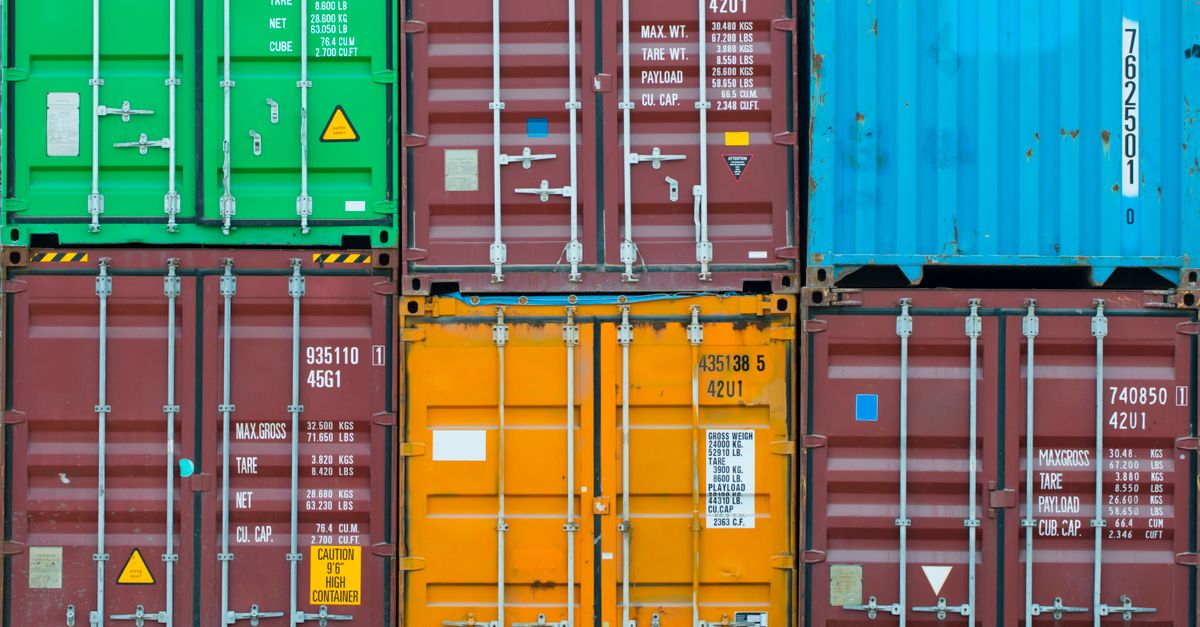
- Transport and palletisation markings: ADR/IMDG codes, handling symbols, storage information
- Outer packaging and distribution cases: barcodes, country of origin, CE marking or local equivalent
Each piece has its own requirements. An SDS for the European Union follows the 16-section format set out under REACH. An SDS for the United States follows the OSHA HazCom format. Translating the text without adjusting the structure to the required format at destination is a common mistake, and it delays customs clearance.
Terminology that cannot vary between languages
In industrial labelling, terminology inconsistency has direct consequences. It confuses the operator, fails audits and, in regulated products, can trigger non-compliance findings.
| English term | Portuguese | Spanish |
|---|---|---|
| Hazard statement | Frase de perigo | Indicación de peligro |
| Safety Data Sheet (SDS) | Ficha de dados de segurança | Ficha de datos de seguridad |
| Batch / Lot | Lote | Lote |
| Shelf life / Expiry date | Validade | Caducidad |
| Instructions for use (IFU) | Instruções de utilização | Instrucciones de uso |
A client-approved glossary, maintained across every product revision, stops the same term showing up translated three different ways across three packaging runs. This matters most when the same product line ships to several markets at once, a problem we cover in detail in our article on translating industrial maintenance manuals.
Mistakes that delay export
The most common problems are not translation errors as such. They are mismatches between the translated text and the regulatory requirement of the destination country:
- Correct hazard pictograms paired with outdated precautionary statements (P-phrases) that no longer match the current GHS revision
- Units of measurement left unconverted, such as pounds instead of kilograms or Fahrenheit instead of Celsius
- Missing market-specific markings, such as CAS numbering in certain countries or recycling labelling required for the EU
- Literal translation of safety instructions that loses the warning tone in the target language
- Incompatible date format, such as MM/DD/YYYY in the US against DD/MM/YYYY across most of Europe
A label with the wrong unit or date format is not a cosmetic issue. On chemical products or medical devices, it can mean customs hold, a product recall or, in serious cases, liability exposure.
How to prepare the project to avoid rework
The single factor that speeds this type of translation up the most is handing over complete, organised source material from the start. Before requesting a quote, the exporting company should gather:
- The editable file of the label or packaging artwork, not just the final PDF
- The list of destination markets, in order of priority
- Any existing technical glossary or sector-mandated terminology
- The applicable regulatory standard at destination (REACH, OSHA, GHS, Mercosur, or others)
With this in hand, the project runs without the mid-translation pauses for clarification that cause most delays.
Why work with M21Global on this type of project
M21Global handles industrial labelling and packaging documentation within its technical translation service, with glossary and translation memory support to keep terminology consistent across batches and markets. For documentation tied to regulated products, such as safety data sheets or instructions for use that support a conformity declaration, we recommend the Estratégica tier, which includes review by a second linguist and a workflow audited under ISO 17100. For product catalogues or supporting technical documentation in high volume, the IAH+ tier speeds up preliminary translation without loosening control over safety-critical text. The team has handled comparable technical content before, as documented in our article on technical document translation companies. Request a quote for your product's packaging and labelling translation and get a response within three business hours.
Related Services
Request a free technical translation quote
- Request a free technical translation quote
- Translating Industrial Maintenance Manuals English Spanish
- Technical Document Translation Company
- User Manual Translation Services
Frequently Asked Questions
Does packaging and label translation need to be certified?
In most cases labelling and safety data sheets do not require certified translation, only technical and regulatory accuracy for the destination market. Certification may be requested when the document supports a specific administrative or customs process, so confirm this requirement with the authority or client asking for it.
Does a Safety Data Sheet follow the same format in every country?
No. The European Union follows the 16-section REACH format, the United States follows the OSHA HazCom format, and other markets have their own variations within the GHS system. The translation needs to match the required structure at destination, not just the wording.
How long does it take to translate labelling for several markets?
Timing depends on label volume, the number of languages and the regulatory complexity of each market. M21Global sends a quote with a defined timeline within three business hours of receiving the material.
Do units of measurement need converting in packaging translation?
Yes, whenever the destination market uses a different system from the source, such as pounds and ounces in the United States or Fahrenheit instead of Celsius. Missing or incorrect conversion is one of the most common mistakes in export projects.