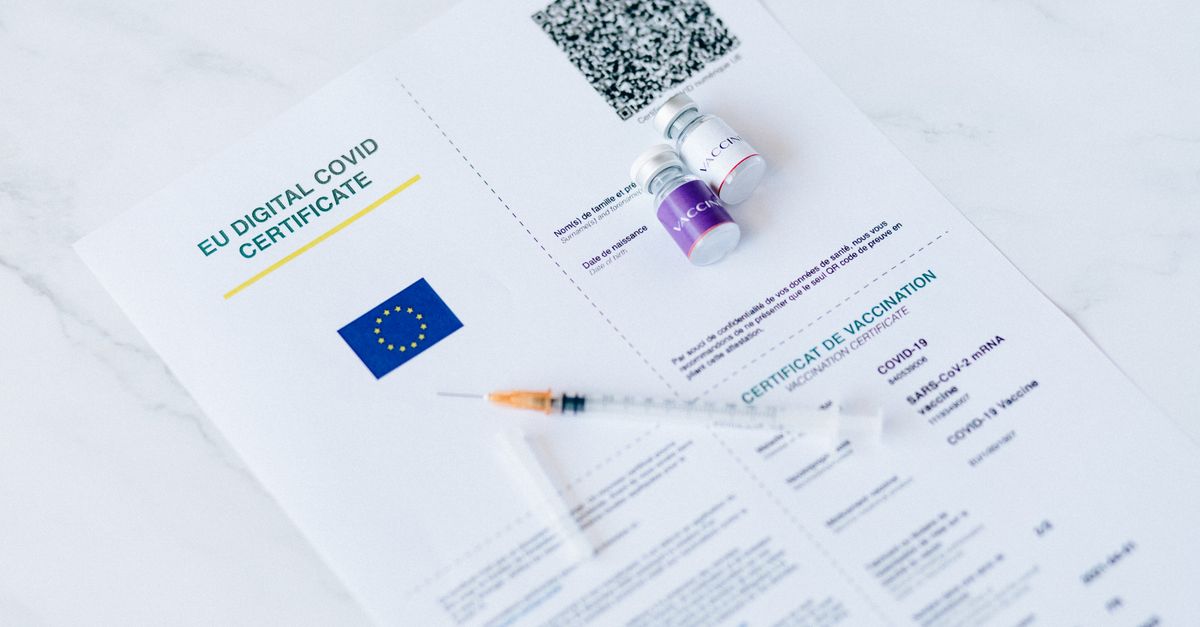
An EU Blue Card application filed with AIMA requires a set of personal and professional documents, almost always issued abroad and in another language. Diploma, employment contract, criminal record certificate. Each of these needs certified translation to be accepted, and a mistake at this stage delays an application that already runs on a tight timeline.
The EU Blue Card is aimed at highly qualified workers from non-EU countries, and AIMA (Agência para a Integração, Migrações e Asilo, which replaced the former SEF in October 2023) assesses the application based on the documentation submitted. If the documents are not correctly translated and certified, the file is returned or suspended until corrected.
Which documents need certified translation
The exact list varies by nationality and professional situation, but the documents most commonly required by AIMA include:
- Academic diploma or professional qualification certificate
- Employment contract or job offer letter
- Criminal record certificate from the country of origin
- Birth or marriage certificate, where family members are included in the application
- Health insurance proof, if not issued in Portuguese or English
All of these documents, when issued in a language other than Portuguese, need certified translation to be accepted in the application. A plain translation, done independently or by a translator without certification, does not meet the requirement.
Certified translation, not sworn translation
Portugal has no sworn translation. This is a common mistake among visa applicants, often confused with how certification works in Brazil or Spain, where sworn translators do exist as a distinct legal figure.
In Portugal, certification works differently. The translator declares before a lawyer registered with the Ordem dos Advogados, or before a notary, that the translation is faithful to the original. Both sign the certification statement, which is attached to the translation and to the original document or a certified copy. It is this full package, document, translation and certification, that AIMA accepts as valid.
For applicants bringing documents from countries that are party to the Hague Apostille Convention, the original document may also need an apostille in the country of issue before translation. Portuguese documents that need to be used abroad follow the reverse path: the apostille is issued by the Procuradoria-Geral da República (PGR), for any type of document. This matters, for example, when a Blue Card holder's spouse needs to take Portuguese documents back to their home country.
Mistakes that delay the AIMA process
EU Blue Card applications rarely get held up over an applicant's qualifications. They get held up over details in the paperwork:
- Translation without valid certification: done by an unidentified translator or missing the signed declaration before a lawyer or notary.
- Inconsistent names across documents: the spelling of names must match exactly across all translated documents, including accents and surname order.
- Academic terminology poorly rendered: degrees, institutions and fields of study need to correspond to the Portuguese education system or to a formulation AIMA can recognise.
- Missing apostille or legalisation, when the country of origin is not covered by a simplified agreement with Portugal.
- Partial documents: translating only the body of the diploma and leaving out annexes, the reverse side, or stamps that are also part of the official document.
A poorly translated employment contract can, for instance, change the stated salary or job title, creating a mismatch with the job offer letter and forcing a full correction and resubmission of the file.
How M21Global handles this type of case
M21Global has worked for more than 20 years on certified translation for legal and immigration cases, including the documents AIMA requires for the EU Blue Card: diplomas, contracts, certificates and criminal records. For this type of dossier, where terminological consistency across documents and the legal validity of certification are decisive, we apply certified legal translation through the Estratégica tier, with review by a second linguist and an audited workflow under ISO 17100.
When an applicant brings documents from several countries, with different certifications and languages, our team confirms in advance what AIMA requires for each document type, avoiding returns over avoidable details. Anyone handling a similar case may also find it useful to read our articles on certified legal translation services and legal translation services for contracts.
Request a quote for your EU Blue Card document set. M21Global replies with a proposal within three business hours.
Related Services
Request a free legal translation quote
- Request a free legal translation quote
- Certified Legal Translation Services
- Sworn Translation For Court Documents
- Legal Translation Services For Contracts
Frequently Asked Questions
Does the translation for an EU Blue Card need to be sworn?
No. Portugal has no sworn translation. The document needs certified translation, where the translator declares before a lawyer or notary that the translation is faithful to the original.
Which documents does AIMA require translated for the EU Blue Card?
Typically a diploma or professional qualification certificate, employment contract, criminal record certificate, and, where applicable, birth or marriage certificates for family members.
Do I need to apostille the document before translating it?
It depends on the country of origin. If that country is party to the Hague Apostille Convention, the original document usually needs an apostille before certified translation; confirm the requirement with the issuing authority or the Portuguese consulate in that country.
Who issues the apostille for Portuguese documents used abroad?
The apostille for Portuguese documents is issued by the Procuradoria-Geral da República (PGR), for any type of document.
How long does certified translation of these documents take?
The timeline depends on document volume and language pair. M21Global sends a quote with a defined timeline within three business hours of the request.